
.png)
Built for every recurring revenue model.
From SaaS platforms to services companies — collect every subscription cycle, automatically.
Book DemoSaaS Companies
Automate monthly and annual subscription billing via UPI Autopay or eNACH mandates.
Startups
Launch recurring billing infrastructure quickly, without months of integration work.
Services Companies
Collect retainer and recurring service fees on mandate — every cycle, without follow-up.
What subscription billing looks like without the right infrastructure.

Slow to get started
Getting mandate-based subscription billing live requires months of integration work.

No dedicated point of contact
Subscription billing issues go into a generic support queue — not to someone who understands your billing model.

Billing logic that fits only standard use cases
Every subscription business has its own billing cycles, grace periods and retry rules. Generic platforms don’t cover them.

Support only during business hours
Billing failures don’t wait for Monday morning.
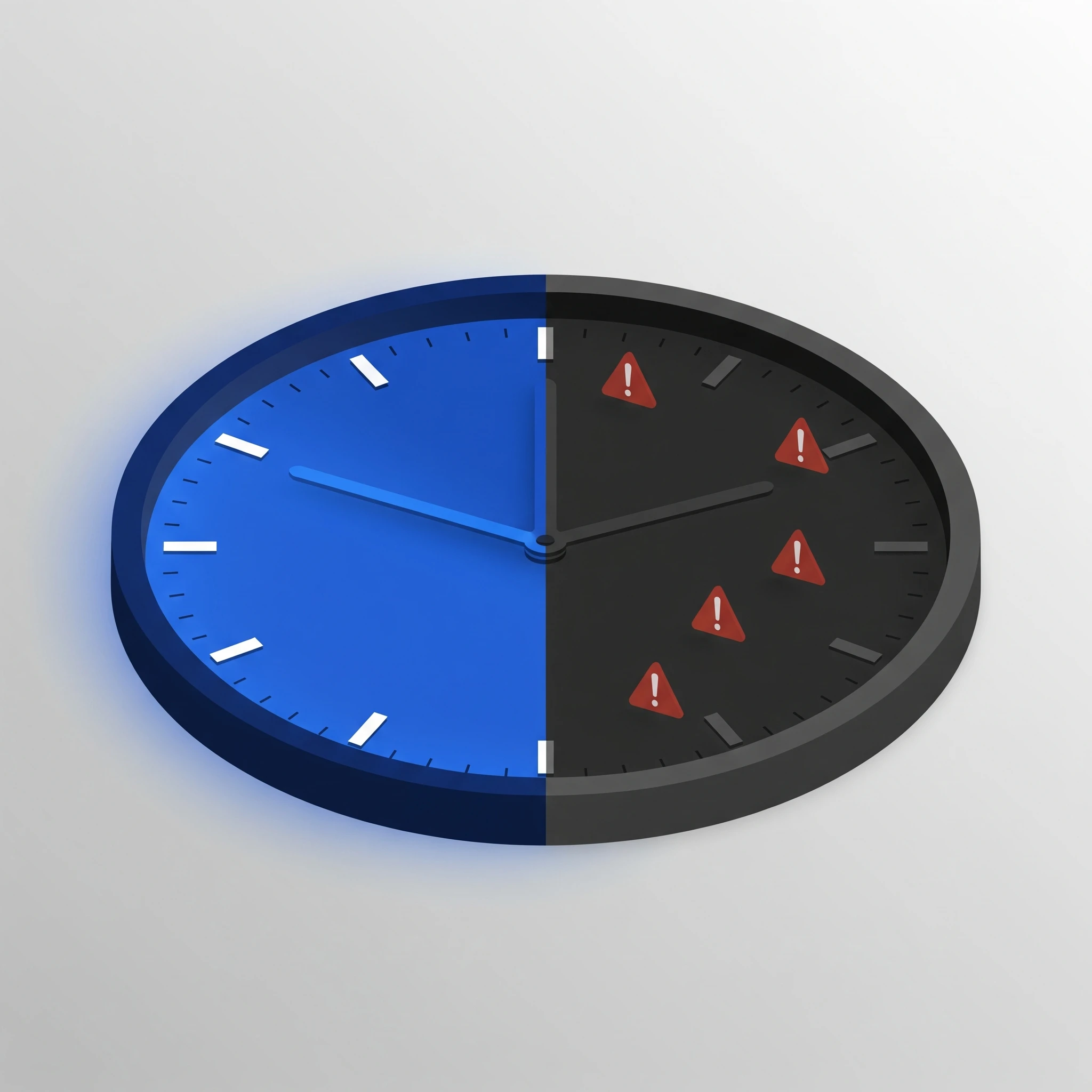
Settlement timelines you can’t plan around
Unpredictable payouts make it harder to manage cash flow against monthly recurring costs.

How We Help
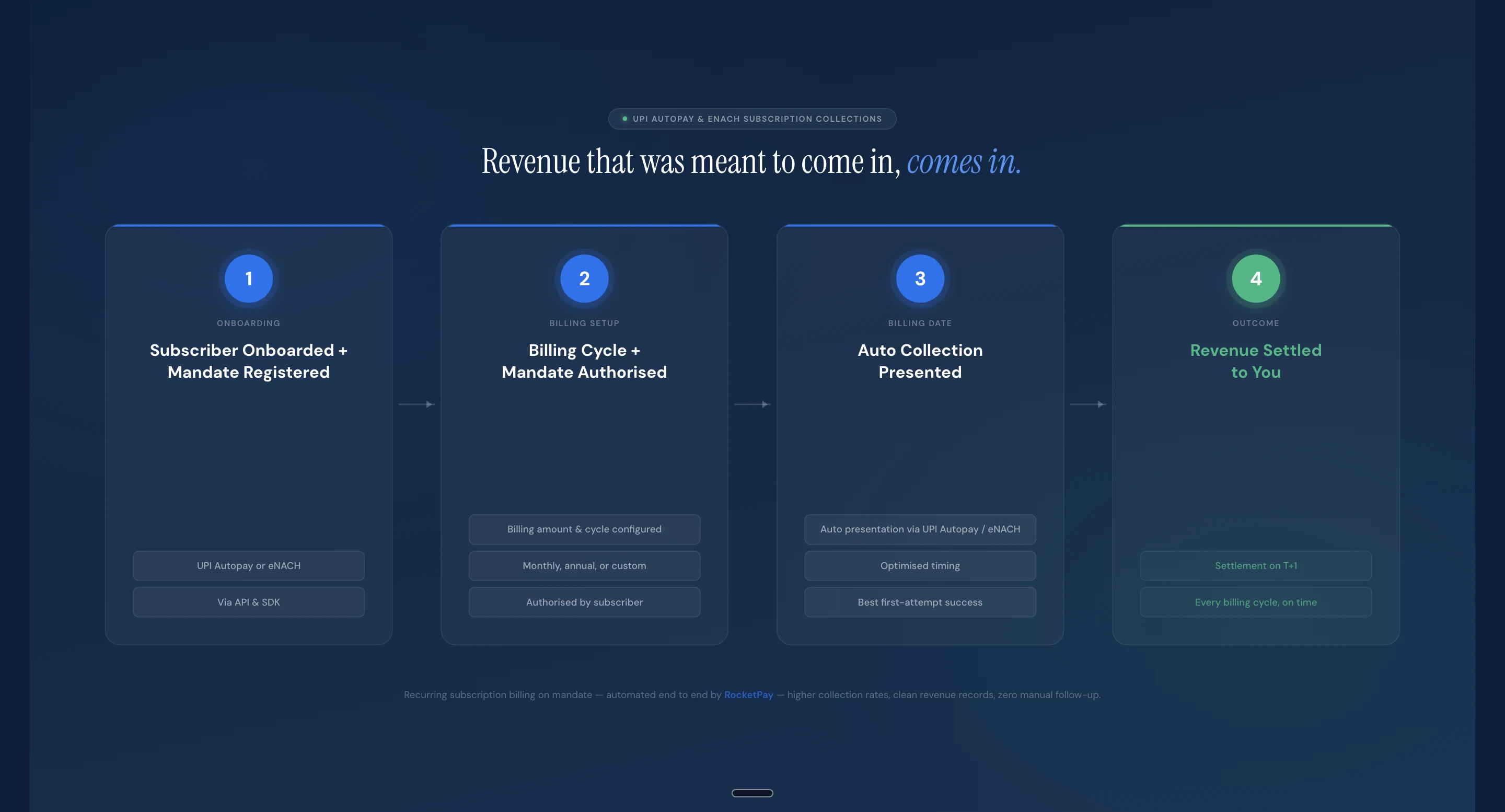
Revenue that was meant to come in, comes in.
RocketPay handles the retry, the timing and the follow-through — so every billing cycle closes cleanly.
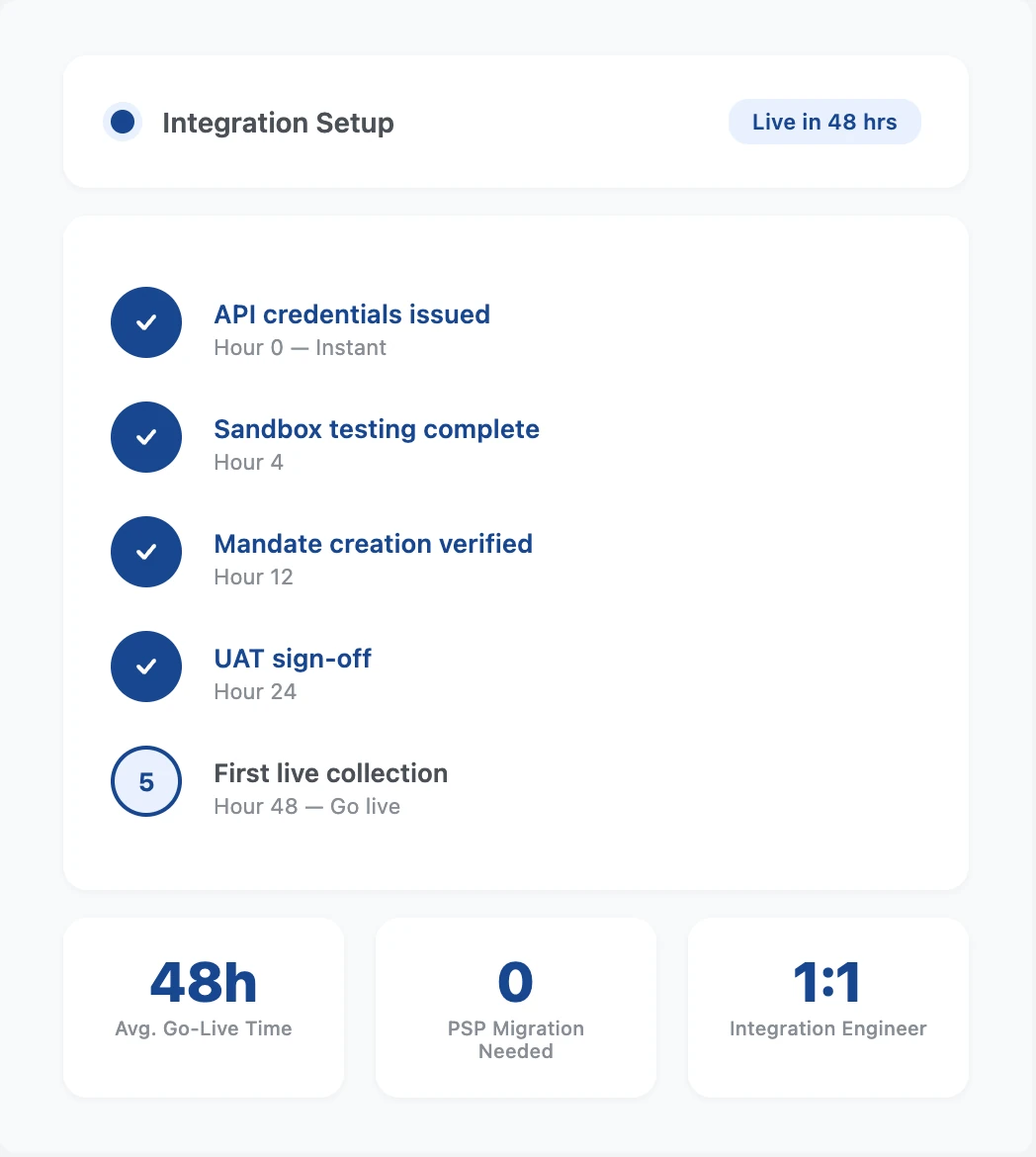
Go live in 48 hours
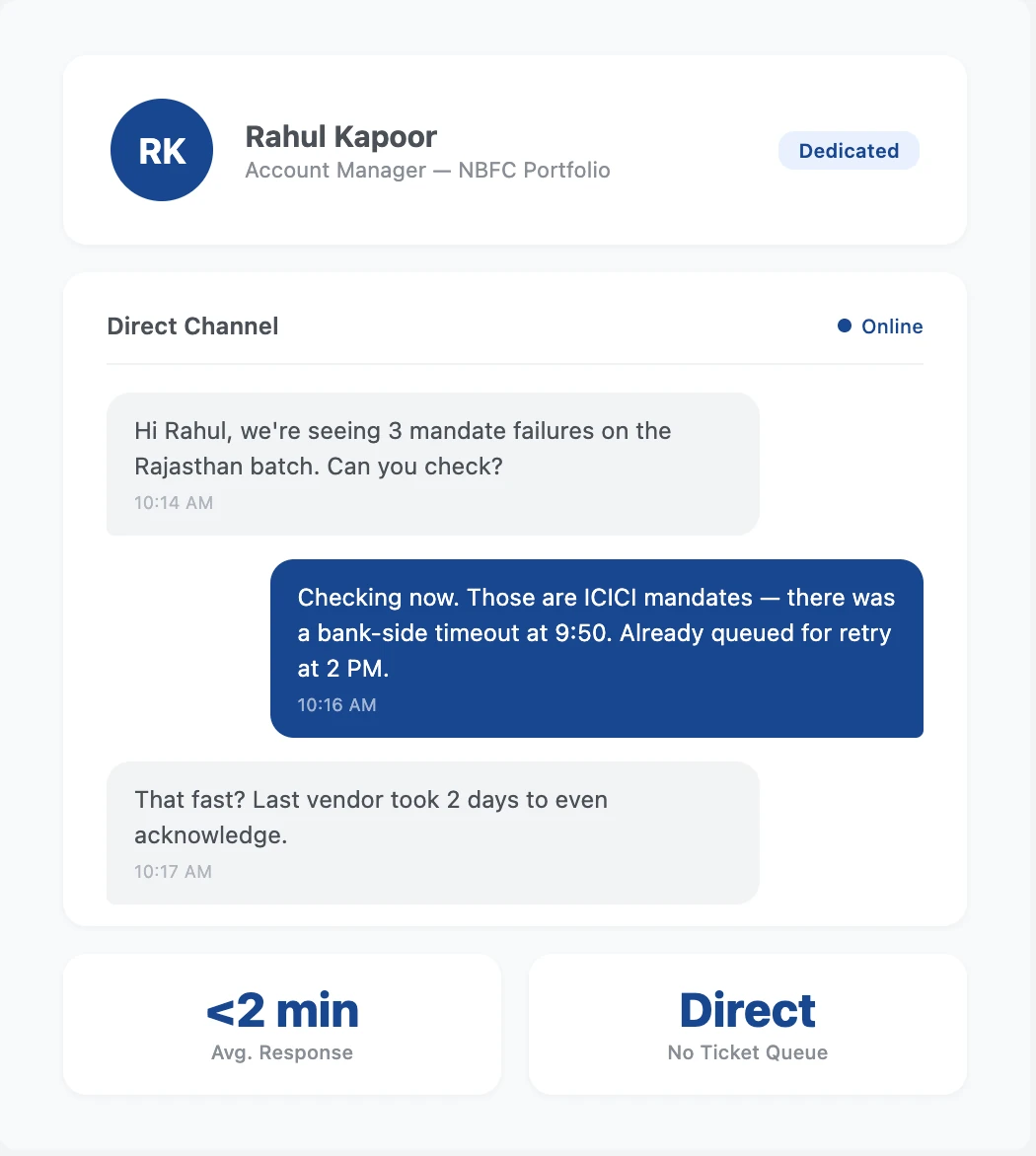
Dedicated Account Manager
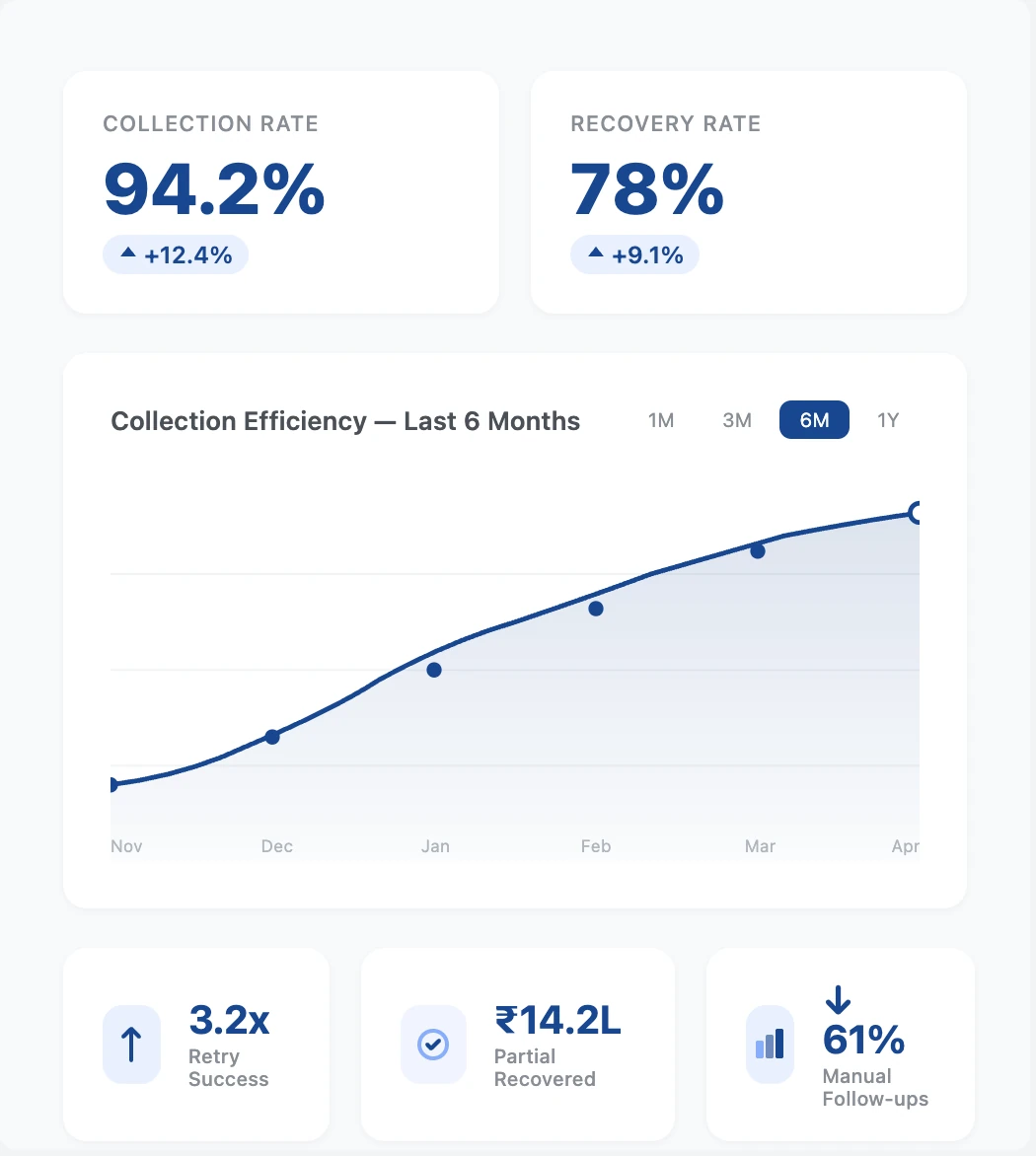
Custom workflow coverage
24x7 Support
Go live in 48 hours
Dedicated Account Manager
Custom workflow coverage
Enhanced security
Our Impact
Subscription businesses across India collect with RocketPay.
50+
Businesses served
₹500 Cr+
Worth of mandates created
50 lakh+
Transactions created
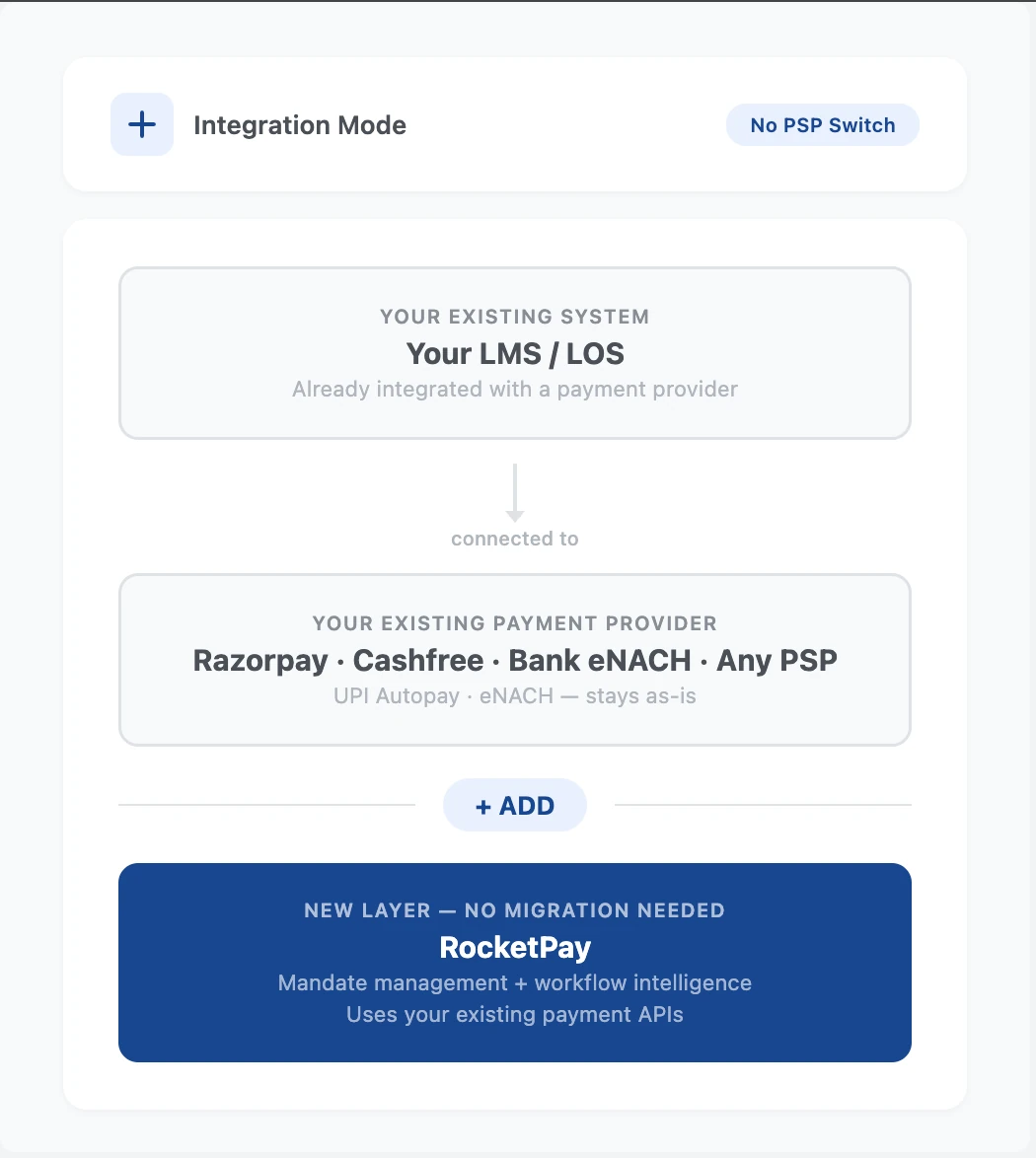
How RocketPay integrates with your subscription billing.
Deploy RocketPay your way.
Built for SaaS platforms and technical billing teams.


“Clayo has revolutionized how I manage my startup’s finances. The platform is intuitive and the insights are incredibly valuable. I can’t imagine going back to how we used to do things.”

Sarah Thompson
Founder, GreenPath Solutions
“Thanks to Clayo, our team has gained better visibility into our budget and spending trends. The automation features save us hours every week, and the platform just keeps getting better.”

David Wilson
CFO, Nova Enterprises
“I’ve used several financial platforms before, but none as complete and user-friendly as Clayo. It’s helped me grow my freelance business with confidence and clarity.”

Emily Harris
Freelance Consultant, EH Strategies
“Clayo delivers exactly what modern businesses need — simplicity, power, and reliability. Our financial operations are smoother than ever.”

James O’Connor
Managing Director, BrightCore Ltd
“Clayo gives me peace of mind. Tracking expenses and setting financial goals has never been easier. The design is clean, and everything just works.”

Olivia Bennett
Marketing Director, Horizon Brands
“As a small business owner, Clayo has been a lifesaver. It’s like having a full finance team in one app. Highly recommend it to anyone looking to scale smartly.”

Michael Reed
Owner, Reed & Co.
Frequently asked questions
What is a mandate?
A mandate is a one-time permission your customer gives you to collect payments automatically on a scheduled date. They approve it once — through UPI Autopay or eNACH, which are NPCI’s systems for automated recurring payments — and every collection after that happens without any follow-up needed from either side.
Does a customer need to approve each collection separately?
No. A mandate requires only one-time authorisation. Once approved, all subsequent collections within the mandate happen automatically on the scheduled dates — no OTP, no PIN, no action required from either party.
Is KYC required to start using RocketPay?
Yes — your business will need to complete a one-time KYC verification as part of onboarding. This is a standard regulatory requirement for all businesses using payment infrastructure in India. No KYC is required from your end customers — they simply authenticate the mandate, and collections run from there.
How does RocketPay automate collections?
Once your customer sets up a mandate, RocketPay handles everything from there. On the due date, the payment is collected automatically via UPI Autopay or eNACH — no manual follow-up needed. If a payment fails, RocketPay retries automatically at the right time. You can also retry manually on your own chosen date directly from the dashboard. Every collection attempt and its status is visible in real time on your dashboard.
Which banks and UPI apps support UPI AutoPay mandate registration?
Any NPCI-registered UPI app and bank supports UPI AutoPay mandate registration — including PhonePe, Google Pay, Paytm, BHIM, WhatsApp Pay, Amazon Pay, and all major bank-native apps. The mandate is registered against the customer's VPA handle. For the complete and updated list of supported banks and PSP apps, visit the official NPCI page.
What instruments can customers use to authenticate an eNACH mandate?
The three most common eNACH authentication methods are — Net Banking, Debit Card, and Aadhaar OTP. Some banks additionally support PAN-based authentication, and a few offer Customer ID-based authentication via their own portal. Available methods vary by bank. For the complete list of supported banks and their authentication options, visit the official NPCI page.
What is the per-transaction limit for UPI Autopay and eNACH collections?
These limits apply per debit — not per mandate. UPI Autopay supports collections up to ₹15,000 per transaction. eNACH supports up to ₹1 crore per transaction. The mandate itself carries no amount cap — it simply authorises future debits on the schedule you set. For portfolios where each collection exceeds ₹15,000, eNACH is the appropriate instrument.
What do the different mandate statuses mean?
Pending — The mandate link has been sent to your customer, but it is not approved yet. No collections will happen until your customer authorises the mandate. Active — Your customer has approved the mandate. Collections will run automatically on the scheduled dates. Paused — The mandate is active but temporarily paused. No future debits will be attempted until the mandate is unpaused or resumed. Finished — The mandate has completed its full tenure. No further debits will occur. Cancelled — The mandate has been cancelled. No further debits will occur. Expired — The mandate link was not approved within the validity window and has lapsed. You will need to send a new mandate request to the customer.
Can collections happen after a mandate is either finished or cancelled?
No. Once a mandate is finished or cancelled, no further debits are possible against it. The mandate is permanently closed. If you need to start collections again, a new mandate must be created and approved by the customer.
How long does settlement take after a successful collection?
Settlement happens on T+1 — funds are credited to your account on the next business day after a successful collection. This applies to both UPI Autopay and eNACH. Settlement timing starts from when the debit is confirmed on the customer's account. You can track exact collection and settlement timestamps in real time from your RocketPay dashboard.
What happens if settlement fails due to a bank issue?
RocketPay automatically retries failed settlements until they go through — no action is needed from your end. The collected amount remains secure and is not affected by the delay. Once the retry succeeds, funds are credited to your account. You can monitor settlement status in real time from your dashboard. You can always reach out to our 24x7 support for assistance.
Can I retry a failed collection on a specific date?
Yes. If a collection attempt fails, you can schedule a retry for any future date of your choice — directly from the dashboard or via API. There is no fixed retry schedule; the business decides when to retry till the mandate remains active — no changes needed.
Do customers receive a notification before each debit?
Yes — customers receive two automatic notifications before each scheduled collection. The destination bank sends a pre-debit notification at least 24 hours in advance, and RocketPay sends one as well. The business does not need to trigger or configure either. The customer is informed of the amount and date before the debit goes through.
What happens if a customer doesn't have sufficient balance on the due date?
For eNACH mandates, the customer's bank charges a penalty of ₹550 + GST for the failed debit. For UPI Autopay mandates, no such penalty applies. In both cases, you can schedule a retry for any future date directly from your dashboard.
What are the different installment statuses and what do they mean?
Upcoming — The due date has not arrived yet. No collection attempt has been initiated. Payment collection initiated — The debit request has been sent to the end-customer's bank. It will be attempted within 24 hours. Payment collected, processing — The amount has been successfully debited. Settlement to your account is in progress. Payment failed — The collection attempt failed. You can schedule a retry for any future date from your dashboard. Settlement initiated — Settlement to your bank account has been initiated. Payment deposited to you — The collected amount has been credited to your linked bank account. Settlement failed — Settlement to your account failed. RocketPay automatically retries. You can also reach out to our 24x7 support. Skipped — This installment was intentionally skipped. No debit was attempted. Manually collected — You have marked this installment as collected outside of RocketPay.
The due date has passed but the installment was not collected. What should I do?
If the collection did not happen on the due date, you can schedule a retry directly from your dashboard. Retries are possible as long as the mandate is active. RocketPay keeps the mandate active for 90 days after the last installment's scheduled collection date, giving you a sufficient window to retry any missed installment.
How do I create a mandate for a customer?
Create mandate → Enter customer details and set the collection schedule → Share the mandate link with your customer → Customer authorises once via UPI Autopay or eNACH → Collections run automatically on the scheduled dates
What does a customer experience when authorising a UPI AutoPay mandate?
Via mandate link — The customer receives the link, opens it, confirms the payment details, enters their UPI ID or selects a UPI app, a request appears on their UPI app, they accept and enter their UPI PIN, and the mandate becomes active. Via QR code — The business presents a QR code, the customer opens their UPI app and scans it, they are taken directly to the AutoPay setup page, they accept and enter their UPI PIN, and the mandate becomes active.
What does a customer experience when authorising an eNACH mandate?
The customer receives the mandate link, opens it and confirms the payment details, enters their bank account details, selects their authentication method (Net Banking, Debit Card, or Aadhaar OTP), completes verification on their bank's page, and the mandate becomes active.
What legal recourse do I have if a borrower's UPI AutoPay or eNACH payment bounces due to insufficient funds?
A mandate bounce due to insufficient funds is a criminal offence under Section 25 of the Payment and Settlement Systems (PSS) Act, 2007 — carrying the same legal weight as a cheque dishonour under Section 138 of the NI Act. Both UPI AutoPay and eNACH/NACH mandates qualify as electronic funds transfers under Section 2(1)(c) of the PSS Act and are explicitly covered. The NPCI's November 2021 circular further confirmed this for UPI AutoPay. To initiate proceedings: issue a written demand notice to the borrower within 30 days of the bounce. The borrower has 15 days to make the payment. If they do not, you can initiate criminal prosecution. Under Section 25(3), the borrower cannot use ignorance of their account balance as a defence. The penalty can be imprisonment up to 2 years, a fine up to twice the defaulted amount, or both.