Automated Mandate Collections for Indian Lenders & Businesses

Automated Mandate Collections for Indian Lenders & Businesses
UPI Autopay & eNACH infrastructure to collect EMIs, deposits and subscriptions on autopilot

Collect the way you want with India’s most flexible collection infra
Collect the way you want with India’s most flexible collection infra
Collect with Web App, Mobile or API
Set mandates on customers with Desktop app, mobile app and APIs

Accept all modes of payments from Customers
Customers can pay via UPI, Debit Card, Aadhar Card, Net Banking and QR Code

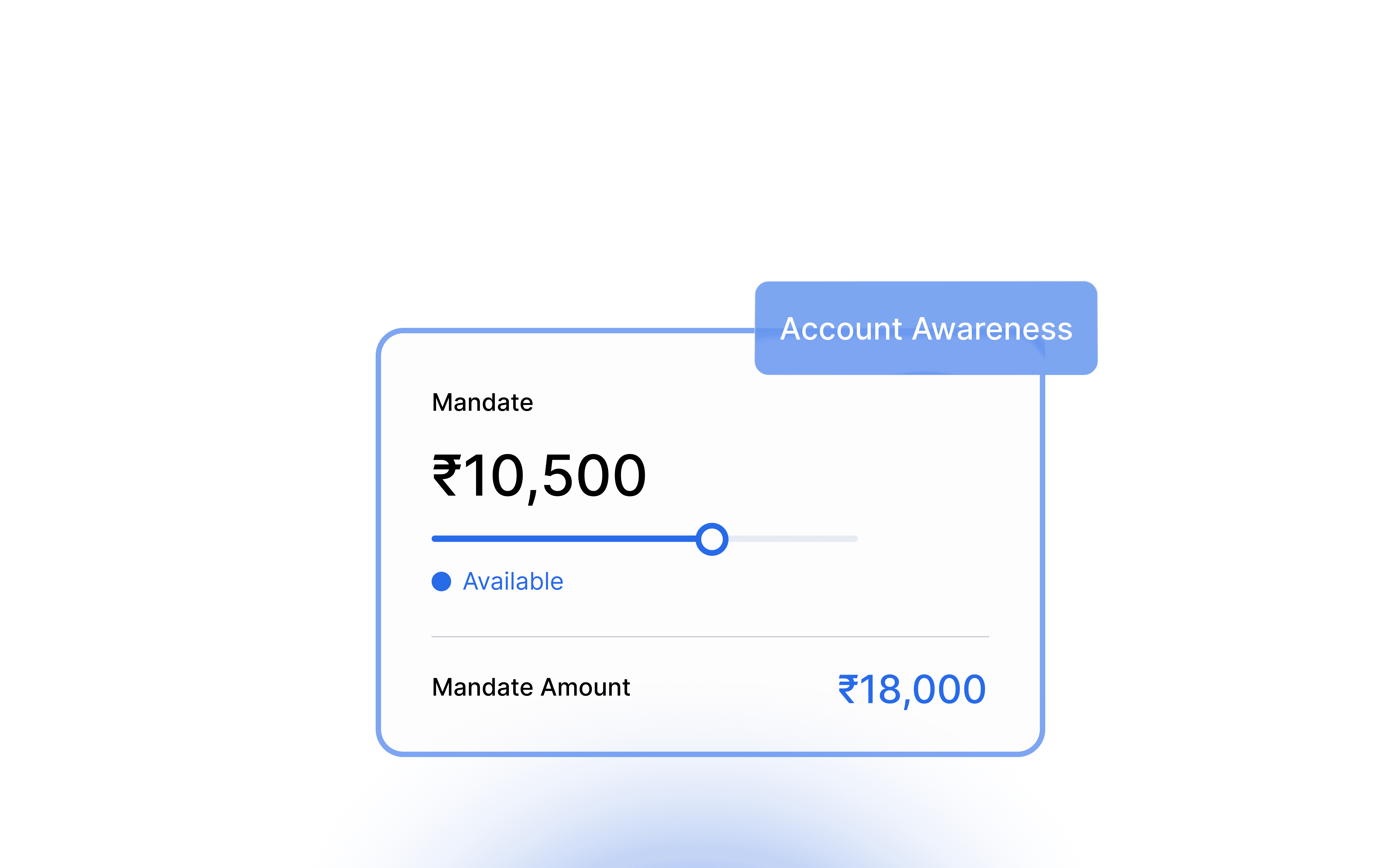
Smart mandates
Present mandates when accounts have balance. Adjust charge basis exisiting balance in account
Build custom collection workflows
Design your own penalties, retries, amounts and schedules to mirror internal policy

Non-cancellable mandates
Non‑revocable UPI Autopay mandates keep EMIs flowing without constant follow‑ups

Collect with Web App, Mobile or API
Set mandates on customers with Desktop app, mobile app and APIs
Accept all modes of payments from Customers
Customers can pay via UPI, Debit Card, Aadhar Card, Net Banking and QR Code
Smart mandates
Present mandates when accounts have balance. Adjust charge basis exisiting balance in account
Build custom collection workflows
Design your own penalties, retries, amounts and schedules to mirror internal policy
Non-cancellable mandates
Non‑revocable UPI Autopay mandates keep EMIs flowing without constant follow‑ups
Collection workflows for all types of Businesses
 scale(0.75) translate(-50 -50)'><path d='M50 6C53 38 62 47 94 50C62 53 53 62 50 94C47 62 38 53 6 50C38 47 47 38 50 6Z' fill='%234DD9F0'/></g></svg>)

RocketPay DLC gets you <1% NPA with
Device‑level locking that makes default the exception, not the norm
RocketPay DLC gets you <1% NPA with
Device‑level locking that makes default the exception, not the norm
Collect with Mandates in 3 Steps
Step 1
Integrate Single API or use our App
Connect once for UPI Autopay and eNACH — no heavy backend build
Step 1
Integrate Single API or use our App
Connect once for UPI Autopay and eNACH — no heavy backend build
Step 2
Create mandates via links, QR, app or Tally
Share links, scan QR or use Tally; customers authorise once, collections recur automatically
Step 2
Create mandates via links, QR, app or Tally
Share links, scan QR or use Tally; customers authorise once, collections recur automatically
Step 3
Set workflow rules to automate processes
Automated skips, balance‑aware retries, penalties & reconciliation in your dashboard
Step 3
Set workflow rules to automate processes
Automated skips, balance‑aware retries, penalties & reconciliation in your dashboard
"Our collection team spent 60% time chasing payments. After integrating Rocketpay, our collection rate improved within 3 months. Their team understands fintech."
Ghanshyaam Kumaavat
Founder • Nidhi NBFC

Go live
More Collections
Customer Support
"Our collection team spent 60% time chasing payments. After integrating Rocketpay, our collection rate improved within 3 months. Their team understands fintech."
Ghanshyaam Kumaavat
Founder • Nidhi NBFC
Go live
More Collections
Customer Support
Recurring payments are complex. We make them simple with real human support, both before & after launch
Modern teams choose Rocketpay
Rocketpay
Payment gateways/Banks
Payment gateways/Banks
Go Live
Go Live
1 day
1 day
1 month
1 month
Integration Effort
Integration Effort
Integrate 1 API
Integrate 1 API
Integrate 10–15 APIs, webhooks, cron jobs
Integrate 10–15 APIs, webhooks, cron jobs
Collection Success Rate
Collection Success Rate
30% higher than industry
30% higher than industry
Backend Requirements
Backend Requirements
None required
None required
Require backend mandate management
Require backend mandate management
NACH & UPI Autopay support
NACH & UPI Autopay support
Both supported via single API
Both supported via single API
Two separate integrations & systems required
Two separate integrations & systems required
ADHOC Mandates
ADHOC Mandates
Fully usable out of the box
Fully usable out of the box
Raw APIs, you must build logic and system
Raw APIs, you must build logic and system
Change Amount, Date, Frequency
Change Amount, Date, Frequency
Partial Collections
Partial Collections
Tech Failure Handling
Tech Failure Handling
Auto-detect, auto-fix, auto-retry
Auto-detect, auto-fix, auto-retry
Retry Collections
Retry Collections
Reconciliation
Reconciliation
Automatic, customer, mandate & instalment level
Automatic, customer, mandate & instalment level
Multi-Account Support
Multi-Account Support
Dedicated Account Manager
Dedicated Account Manager
Only for high value clients, no support for others
Only for high value clients, no support for others
Developer Experience
Developer Experience
Fewer cleaner APIs, direct dev to dev support
Fewer cleaner APIs, direct dev to dev support
Complex fragmented APIs, no dev to dev support
Complex fragmented APIs, no dev to dev support
Need a custom plan?
Need a custom plan?
We can tailor workflows, limits, and infrastructure to fit your team’s needs.
Trusted by India's lenders and businesses
Switched from cash collections to mandates. EMI recovery up 27%, field visits down massively.

Rakesh Jain
Platform Engineer
Earlier, bounced EMIs meant chaos. Now smart retries pick them up quietly in the background

Priyank Shah
Engineering Lead
Switched from cash collections to mandates. EMI recovery up 27%, field visits down massively.
Rakesh Jain
Platform Engineer
Earlier, bounced EMIs meant chaos. Now smart retries pick them up quietly in the background
Priyank Shah
Engineering Lead
Took us two days to integrate. First mandates were live before week‑end reconciliation

Ankit Verma
SaaS Growth Consultant
Switched from cash collections to mandates. EMI recovery up 27%, field visits down massively.
Rakesh Jain
Platform Engineer
Earlier, bounced EMIs meant chaos. Now smart retries pick them up quietly in the background
Priyank Shah
Engineering Lead
Took us two days to integrate. First mandates were live before week‑end reconciliation
Ankit Verma
SaaS Growth Consultant
Our branch staff set up mandates from Tally. Zero extra tools, zero training issues

Meena Kulkarni
COO at BioScale
We were terrified of eNACH ops. RocketPay basically gave us a ready collections backend

Saurabh Goyal
Co-founder at SparkPoint
Trade credit DSO dropped from 36 days to 14. Cashflow planning finally isn’t guesswork

Vikram Singh
Creative Director at LaunchLab
Our branch staff set up mandates from Tally. Zero extra tools, zero training issues
Meena Kulkarni
COO at BioScale
We were terrified of eNACH ops. RocketPay basically gave us a ready collections backend
Saurabh Goyal
Co-founder at SparkPoint
Earlier, tech failures were invisible. Now we see, auto‑retry and fix them same day

Nikhil Rao
Head of Marketing at PayNow
Reconciliation used to be Excel hell. Now instalment‑level reports drop straight into our systems

Arvind Menon
Founder at Taskly
Got questions?
We’ve got answers.
Still have questions?
Contact us and we’ll help you out.
01
What is a mandate?
A mandate is a one-time permission your customer gives you to collect payments automatically on a scheduled date. They approve it once — through UPI Autopay or eNACH, which are NPCI's systems for automated recurring payments — and every collection after that happens without any follow-up needed from either side.
01
What is a mandate?
A mandate is a one-time permission your customer gives you to collect payments automatically on a scheduled date. They approve it once — through UPI Autopay or eNACH, which are NPCI's systems for automated recurring payments — and every collection after that happens without any follow-up needed from either side.
02
Which banks and UPI apps support UPI AutoPay mandate registration?
Any NPCI-registered UPI app and bank supports UPI AutoPay mandate registration — including PhonePe, Google Pay, Paytm, BHIM, WhatsApp Pay, Amazon Pay, and all major bank-native apps. The mandate is registered against the customer's VPA handle. For the complete and updated list of supported banks and PSP apps, visit the official NPCI page.
02
Which banks and UPI apps support UPI AutoPay mandate registration?
Any NPCI-registered UPI app and bank supports UPI AutoPay mandate registration — including PhonePe, Google Pay, Paytm, BHIM, WhatsApp Pay, Amazon Pay, and all major bank-native apps. The mandate is registered against the customer's VPA handle. For the complete and updated list of supported banks and PSP apps, visit the official NPCI page.
03
What instruments can customers use to authenticate an eNACH mandate?
The three most common eNACH mandate authentication methods are — Net Banking, Debit Card, and Aadhaar OTP. Some banks additionally support PAN-based authentication, and a few offer Customer ID-based authentication via their own portal. Available methods vary by bank. For the complete list of supported banks and their authentication options, visit the official NPCI page.
03
What instruments can customers use to authenticate an eNACH mandate?
The three most common eNACH mandate authentication methods are — Net Banking, Debit Card, and Aadhaar OTP. Some banks additionally support PAN-based authentication, and a few offer Customer ID-based authentication via their own portal. Available methods vary by bank. For the complete list of supported banks and their authentication options, visit the official NPCI page.
04
Does a customer need to approve each collection separately?
No. A mandate requires only one-time authorisation. Once approved, all subsequent collections within the mandate happen automatically on the scheduled dates — no OTP, no PIN, no action required from either party.
04
Does a customer need to approve each collection separately?
No. A mandate requires only one-time authorisation. Once approved, all subsequent collections within the mandate happen automatically on the scheduled dates — no OTP, no PIN, no action required from either party.
05
Is KYC required to start using RocketPay?
Yes — your business will need to complete a one-time KYC verification as part of onboarding. This is a standard regulatory requirement for all businesses using payment infrastructure in India. No KYC is required from your end customers — they simply authenticate the mandate, and collections run from there.
05
Is KYC required to start using RocketPay?
Yes — your business will need to complete a one-time KYC verification as part of onboarding. This is a standard regulatory requirement for all businesses using payment infrastructure in India. No KYC is required from your end customers — they simply authenticate the mandate, and collections run from there.
06
How long does settlement take after a successful collection?
Settlement happens on T+1 — funds are credited to your account on the next business day after a successful collection. This applies to both UPI Autopay and eNACH. Settlement timing starts from when the debit is confirmed on the customer's account. You can track exact collection and settlement timestamps in real time from your RocketPay dashboard.
06
How long does settlement take after a successful collection?
Settlement happens on T+1 — funds are credited to your account on the next business day after a successful collection. This applies to both UPI Autopay and eNACH. Settlement timing starts from when the debit is confirmed on the customer's account. You can track exact collection and settlement timestamps in real time from your RocketPay dashboard.
